Choosing a floor tile is not just a matter of taste. The format, finish, slip resistance standard, and environmental footprint of the tile influence the final result as much as the color or pattern. This article compares the technical and aesthetic parameters that truly differentiate the available options to guide a choice of floor tiles suitable for each room.
Slip coefficient and slip resistance standard: the criterion that visuals do not show
The European standard EN 16166:2025 now imposes a minimum slip coefficient R11 for all indoor floor tiles in wet areas. Kitchen, bathroom, laundry room: any project in these spaces must integrate this constraint from the outset.
A polished marble effect tile, however elegant, may not meet this threshold. In contrast, textured finishes (structured, brushed, grip) easily comply. The aesthetic choice is therefore made within a regulatory framework, not outside of it.
To explore the best floor tile ideas compatible with this requirement, it is essential to systematically check the product’s technical data sheet before validating a visual crush.
Large format tiles or micro-tiles: comparison table based on usage
The tile format alters the perception of a space, as well as its mechanical resistance and installation complexity. Here is a synthetic comparison of the two extremes of the spectrum.
| Criterion | Large format (60 cm and above) | Micro-tiles (less than 20 cm) |
|---|---|---|
| Visual effect | Visually enlarges the room, discreet joints | Creates rhythm, allows patterns and mosaics |
| Installation | Double gluing, perfectly flat floor required | More tolerant of substrate irregularities |
| Vibration resilience | More fragile in mechanically stressed areas | Better documented resilience in post-earthquake feedback in the Mediterranean |
| Maintenance | Fewer joints, quick cleaning | More joints, possible soiling |
| Recommended rooms | Living room, open-plan area, wide corridor | Bathroom, walk-in shower, backsplash |
Large format tiles dominate living room and open-plan area projects. Micro-tiles, on the other hand, are regaining ground in wet areas and zones where technicality takes precedence over visual expanse.
Wood effect tiles: matte finish or glossy finish
Wood imitation remains one of the most sought-after options for a living room or bedroom floor. Two finishes compete, with very different results in daily use.
The matte finish provides a natural look close to raw wood. It hides fingerprints and slight dirt. In contrast, the so-called “glossy” finish (slightly satin) offers a brighter appearance and superior resistance to daily scratches, according to feedback from professional installers surveyed by the French Tile Federation.
In a family living room with frequent traffic, the glossy finish retains its appearance longer, despite requiring slightly more regular maintenance to avoid water marks. The matte finish is better suited for a bedroom or office where traffic remains moderate.
- Matte finish: authentic look, hides micro-soiling, suitable for quiet rooms
- Glossy finish: better scratch resistance, bright appearance, requires more frequent wiping
- Recommended format: long planks (at least 80 cm) for a credible wood effect, staggered installation
Biosourced tiles and recycled materials: what changes concretely
The Union of Ceramists of France reports a massive integration of recycled and natural materials in tile manufacturing recently. Compressed terracotta, mixtures based on ceramic waste, and glazes without heavy metals are gaining ground.
This evolution is not just green marketing. Biosourced tiles reduce the carbon footprint during manufacturing and respond to a growing demand in ecological renovation projects. For a home floor, this means a product with a documented life cycle, from extraction to installation.
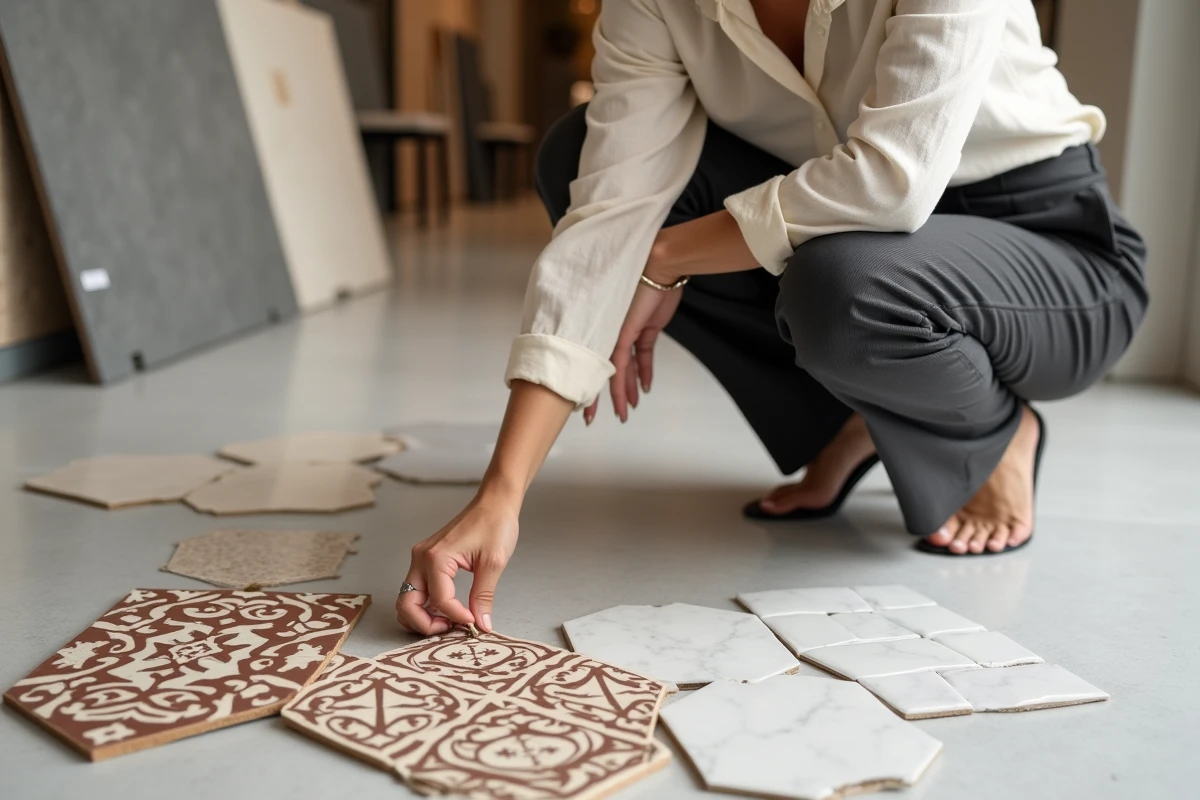
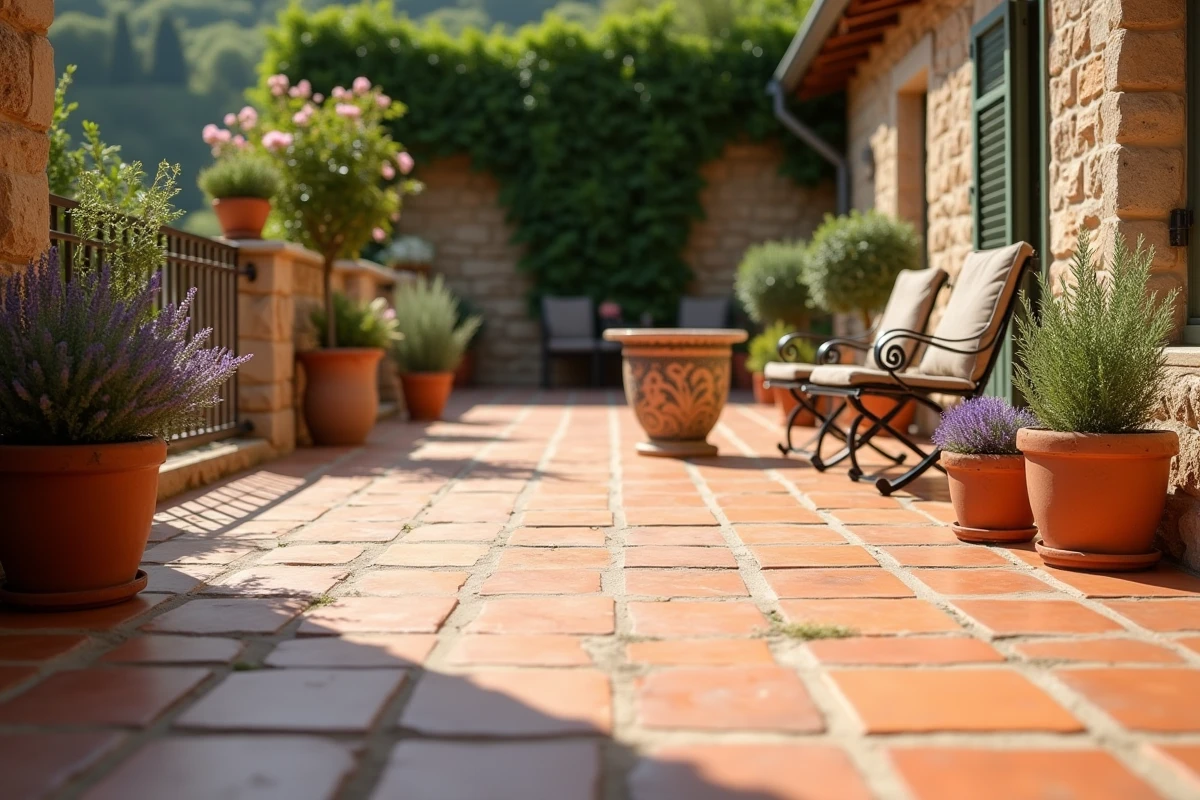
Compressed terracotta, in particular, offers a warm appearance that resembles traditional tiles without the waterproofing constraints. It adapts well to living spaces, entrances, and corridors.
Adapting floor tiles to the room: three combinations that work
Rather than listing ten generic inspirations, three specific combinations deserve to be detailed because they solve concrete interior decoration problems.
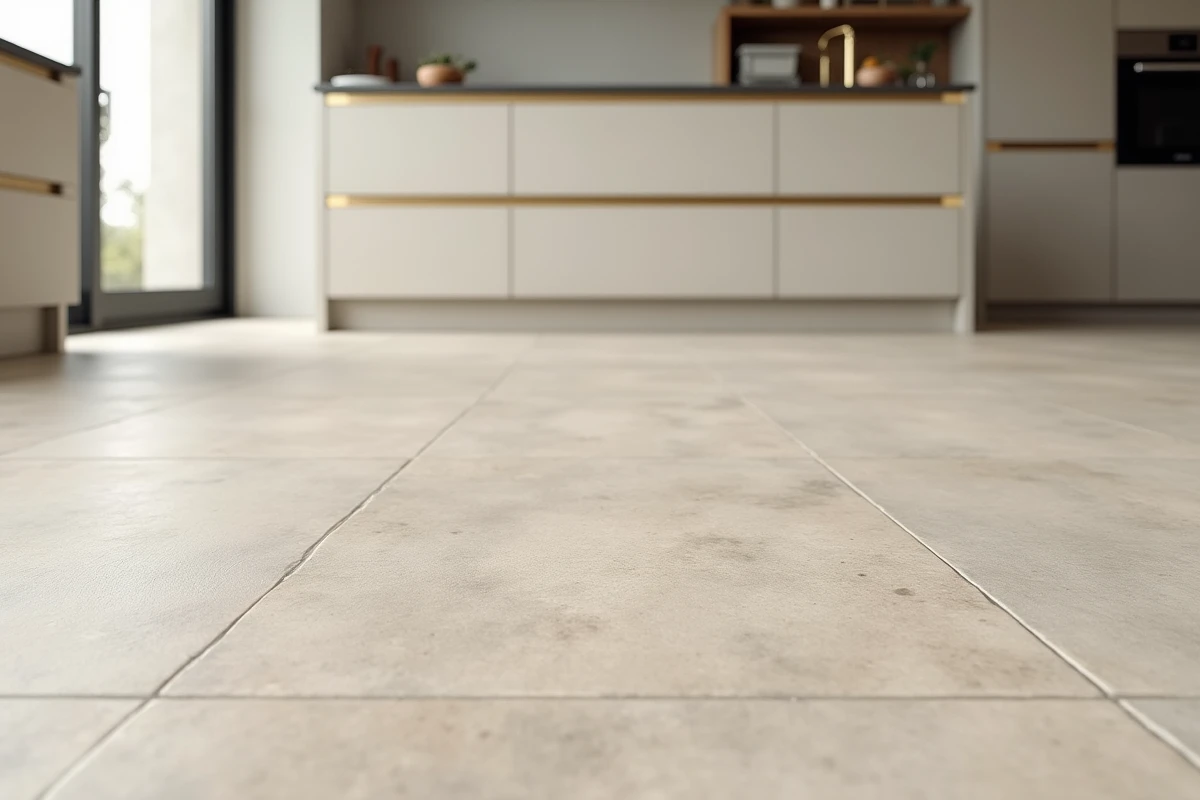
Open living room to kitchen: light stone effect tile in large format. The same tile crossing both spaces eliminates visual disruption and enlarges the room. A format larger than 60 cm with fine joints (less than 2 mm) enhances the continuity effect.
Master bathroom: micro-mosaic on the shower floor, medium format tile on the main floor. The contrast in format delineates the wet area without a partition while respecting slip resistance requirements in the shower.
Entrance and corridor: cement tile effect with geometric pattern. This area can support a more assertive decor because it remains a passage space. The pattern directs the gaze towards the interior of the house.
- Living room-kitchen: stone effect, large format, fine joints for continuity
- Bathroom: mosaic in shower (minimum R11), intermediate format elsewhere
- Entrance: geometric patterns like cement tiles, resistant to heavy traffic
The choice of floor tiles relies on a balance between slip resistance regulations, the format suitable for the area, the finish compatible with the actual use of the room, and now, the environmental footprint of the product. These four parameters, crossed with the desired style, effectively narrow down the possibilities and avoid aesthetic or technical casting errors.