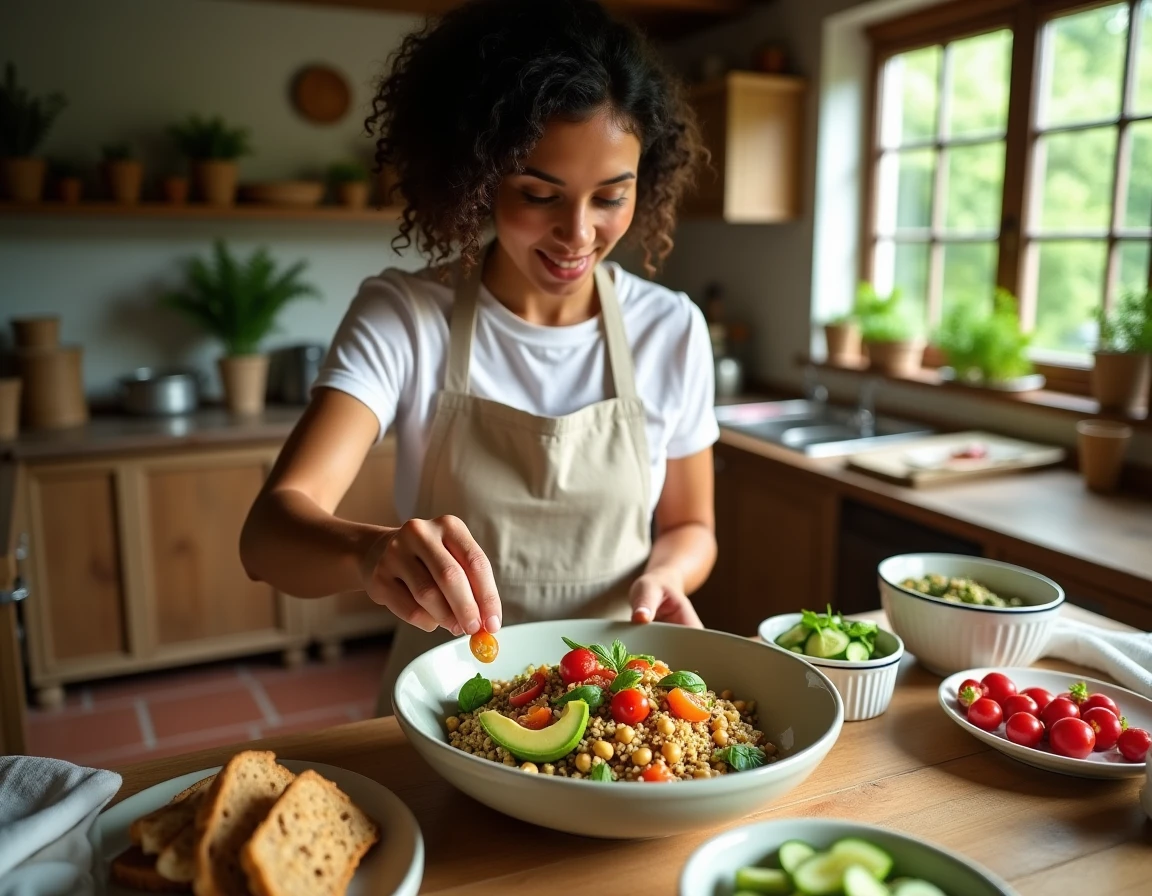
A balanced vegetarian meal is based on three nutritional pillars: a source of plant proteins, seasonal vegetables, and a whole grain or starch. The National Nutrition Health Program (PNNS 4) recommends increasing the consumption of legumes and reducing animal proteins, citing vegetarian meals as an option compatible with public health guidelines. Starting from this foundation allows for the creation of delicious and healthy dishes without falling into monotony.
Plant proteins in daily life: the important combinations
The main concern when eating vegetarian is about protein. Legumes (lentils, chickpeas, red beans) provide a solid intake, but their amino acids are incomplete when consumed alone.
Combining a legume with a grain in the same meal corrects this imbalance. A red lentil dahl served over basmati rice or a split pea soup accompanied by whole grain bread covers the spectrum of amino acids. This complementarity is a fundamental principle of vegetarian cooking, not just a trick.
Recipes related to these combinations work well in lunchbox format for the office as well as for dinner. According to the Greenflex/Ademe 2023 Barometer, the consumption of vegetarian meals at lunch during the week is significantly increasing, driven by remote work and CSR policies in collective catering. On laptitegraine.fr, you can find recipes for bowls and composed salads that illustrate this logic of portable and complete meals.
- Lentils + rice: base for dahl, Indian kitchari, or a simple bowl with roasted vegetables
- Chickpeas + semolina: vegetarian couscous, hummus with pita bread, warm spiced salad
- Red beans + corn: chili sin carne, burritos, Mexican patties
- Tofu or tempeh + quinoa: protein-packed bowls to go, Asian-style stir-fries
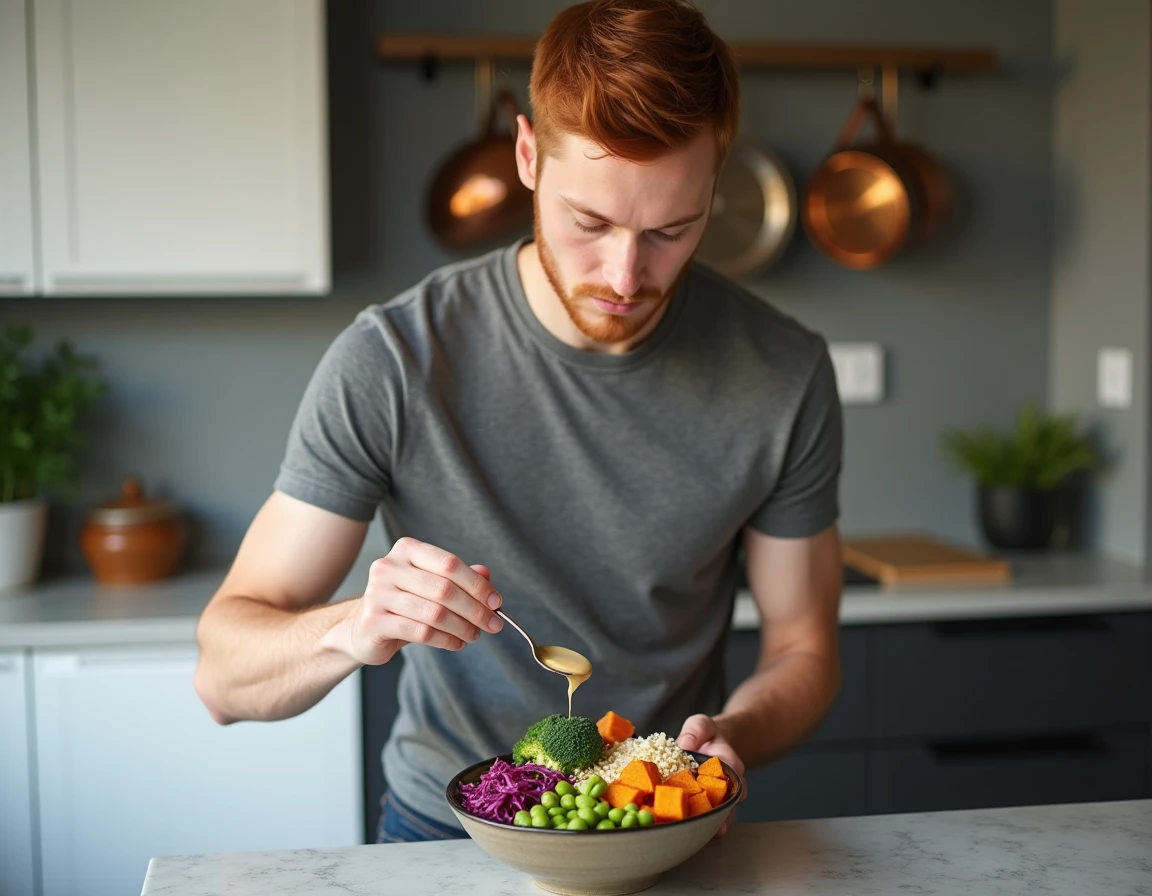
Seasonal vegetables: creating vegetarian dishes without fixed recipes
Following the seasons changes the way of cooking vegetarian. Instead of looking for a specific recipe, starting with the available vegetable at the market naturally leads to varied dishes each week.
Summer zucchinis and tomatoes lend themselves to gratins, stuffed dishes, and raw salads. In autumn, pumpkin becomes the base for a soup, curry, or risotto. This approach avoids falling back on the same dishes and encourages exploring different cooking methods: roasting, braising, marinating raw.
Three techniques that transform a common vegetable
Roasting in a hot oven concentrates flavors. Zucchini cut in half, brushed with olive oil and roasted for twenty minutes, take on a melting texture and a slightly caramelized taste that steaming does not provide.
The sweet-salty glaze changes the perception of a vegetable. A drizzle of soy sauce mixed with honey and sesame, poured over carrots or cauliflower before baking, results in something far from a bland side dish.
Raw marination works on firm vegetables. Sliced mushrooms marinated in lemon, garlic, and walnut oil become a full-fledged starter in just one hour in the refrigerator.
Vegetarian sauces and condiments to enhance every dish
A bowl of grains and legumes without well-crafted seasoning remains a dull meal. The sauce makes the difference between an acceptable dish and one you want to recreate.
Tahini (sesame paste) diluted with lemon and a bit of water serves as a versatile base. Drizzled over a bowl of roasted vegetables or on a chickpea salad, it adds creaminess and extra protein.
Fresh goat cheese sauce works on a different level. Mixed with fresh herbs and a drizzle of olive oil, the goat cheese slightly melts on warm vegetables, creating a creamy texture without béchamel.
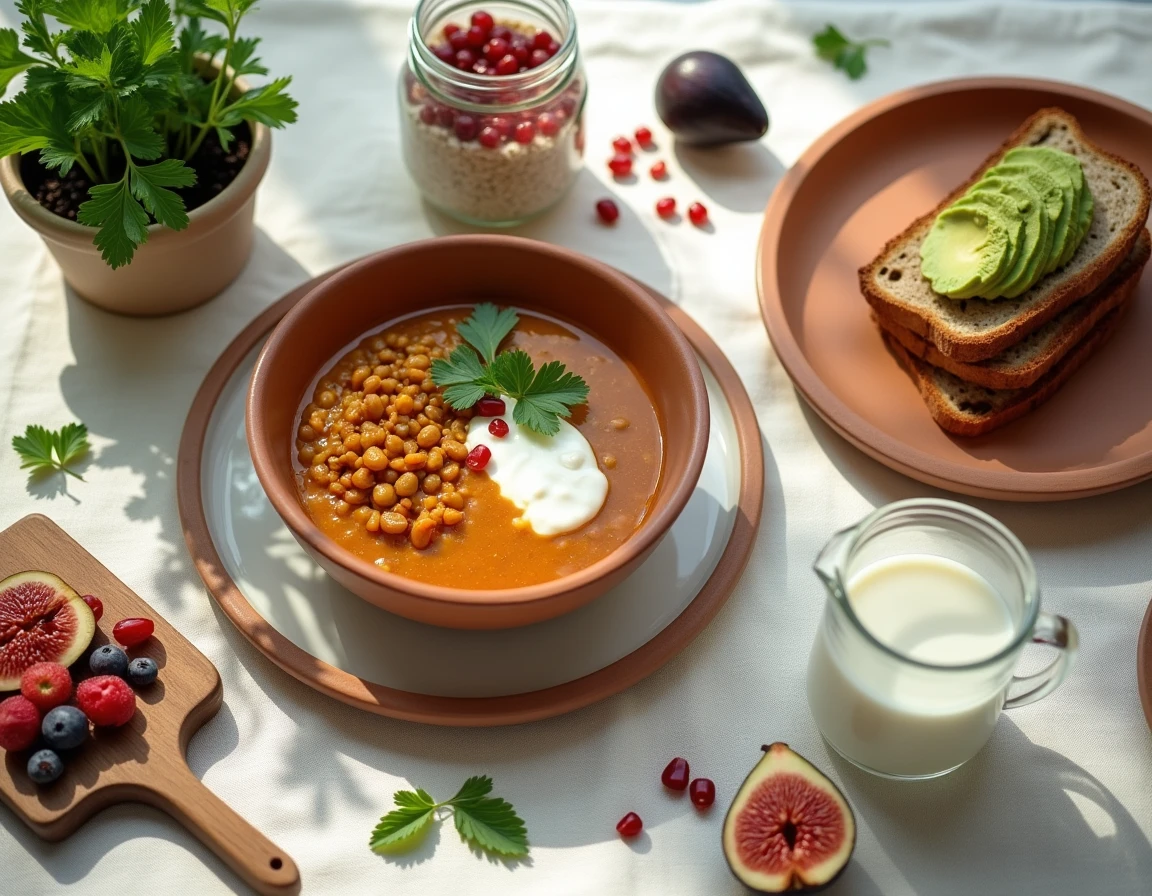
Condiments to prepare in advance
A quick vegetarian meal during the week often relies on what’s already waiting in the refrigerator. Preparing two or three condiments on Sunday simplifies the following meals.
- Homemade hummus: chickpeas blended with tahini, lemon, and garlic, keeps for five days in the fridge
- Greens pesto: radish or carrot tops blended with cashews and either plant-based or regular parmesan
- Quick pickles: sliced red onion or cabbage in a vinegar-sugar-salt mix, ready in two hours
These preparations can be added to a wrap, spread on sourdough bread, or included in a savory cake improvised with leftover vegetables.
Vegetarian meals and lunchboxes: adapting the format to daily life
The rise in vegetarian meals consumed outside the home prompts a rethink of both the container and the content. A saucy dish that holds well on a plate may become impractical in a sealed container.
Composed bowls travel better than saucy dishes. A base of quinoa or bulgur, a portion of seasoned lentils, roasted vegetables, and a separate sauce in a small jar: the meal remains appetizing even when reheated.
Whole grain pasta salads with sun-dried tomatoes, olives, and crumbled goat cheese can withstand several hours without refrigeration. Vegetable cake (zucchini, tomatoes, feta) cuts easily and can be eaten cold.
The key is to think of the vegetarian meal as a modular assembly: a protein, a starch, a vegetable, and a condiment. This simple framework allows for varying combinations without ever strictly following a recipe, making vegetarian daily life as practical as it is delicious.