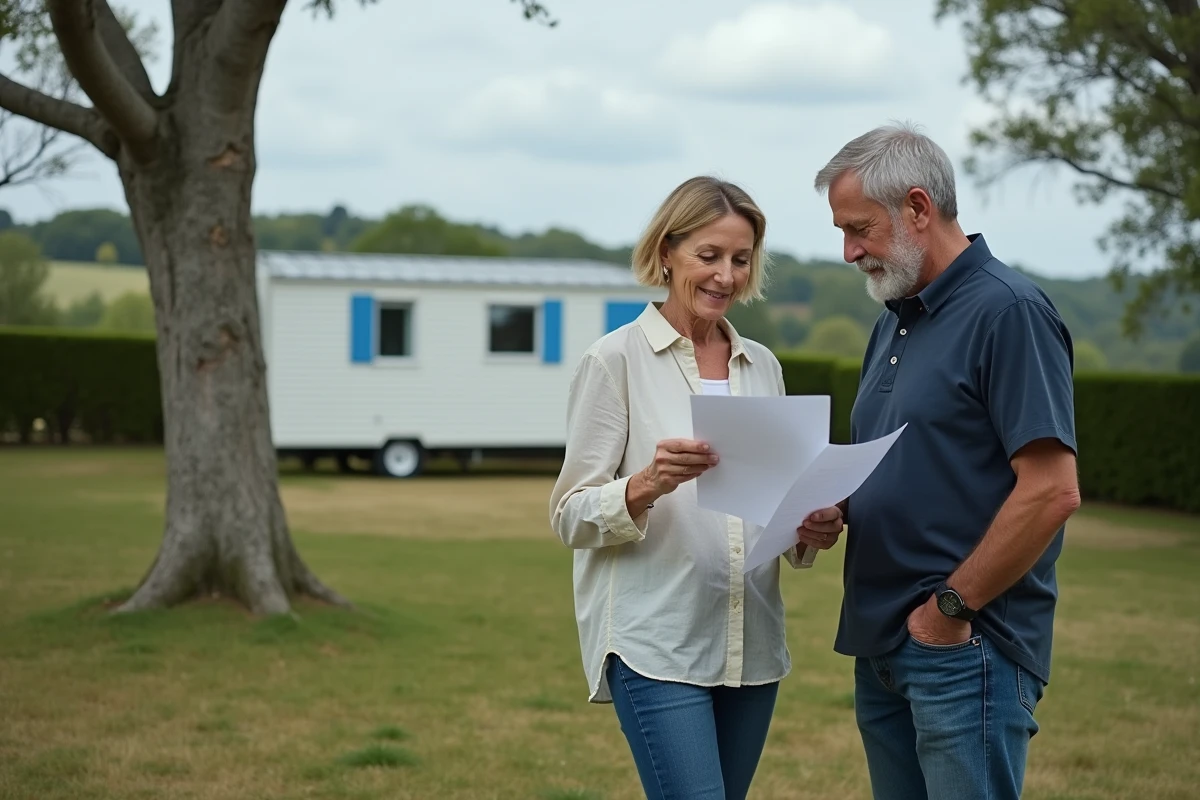
A plot lease in a PRL that expires in three years, a mobile home installed for eight years on Breton land: this is the type of advertisement that is increasingly found on private sale websites. Buying a plot of land with a mobile home in Brittany attracts with its low entry price, but the setup relies on legal and financial mechanisms that the sales sheet does not detail.
Depreciation of the mobile home and duration of the PRL lease: the calculation no one considers
A mobile home loses value each year. In a residential leisure park (PRL), the lease is often limited to a duration that does not exceed ten years. Therefore, one ends up with an asset that depreciates quickly, placed on land that one is not sure of retaining in the long term.
When purchasing a used mobile home already installed, its residual value decreases much faster than the remaining duration of the lease. A model that has been in place for seven or eight years has already lost the majority of its initial value. If the lease still runs for another two or three years, the risk is of buying an asset that is almost fully depreciated, then having to negotiate a contract renewal without any guarantee on the pricing conditions.
Before signing, one calculates the actual annual cost: the purchase price of the mobile home divided by the number of years remaining on the lease, to which one adds the rent for the plot and the charges. If this total exceeds the cost of an equivalent seasonal rental in the same area, the operation does not make financial sense. When considering the purchase of a plot of land with a mobile home in Brittany, this projection over the duration of the lease serves as the first decision filter.

Camping or Breton PRL site contract: clauses to read before signing
The distinction between a classic campsite and a PRL changes everything. In a campsite, one signs a year-round pitch rental contract, renewable but terminable by the manager under certain conditions. In a PRL, the lease may offer a longer duration, but the exit and renewal clauses vary from one park to another.
Contract points that create disputes
- The transfer clause: some contracts require that the park manager validate the next buyer, or even charge a commission on the resale of the mobile home. Without this verification, one may find oneself blocked when reselling.
- The amount of the annual rent for the plot and its revision conditions: a rent indexed to the reference rent index (IRL) is predictable, but some parks apply free revisions at each renewal.
- The obligation for maintenance and replacement: several managers require the replacement of the mobile home beyond a certain age, which represents a significant additional cost.
- The authorized occupancy periods: a PRL open year-round does not offer the same rights as a seasonal campsite. Checking if the park allows permanent or only tourist occupancy avoids an unpleasant regulatory surprise.
One should systematically request the park’s internal regulations and the standard contract before any purchase offer. Feedback varies on this point, but most disputes in PRLs arise from a late reading of the pitch contract.
Urban planning regulations and installation in Brittany: what the land allows
A mobile home is not considered real estate under the Urban Planning Code. It retains its status as a mobile leisure residence as long as it remains in a declared campsite or PRL. Placing a mobile home on private land outside an approved structure is prohibited unless under very strict exemptions.
In Brittany, a prefectural circular from March 2025 reminded of the obligations related to the installation of mobile residences, strengthening controls on unclassified land. Specifically, agricultural or natural land cannot legally accommodate a mobile home, even temporarily.
Tiny house on wheels: a different regulatory alternative
Since the extension of decree n°2024-1123 from November 2024, approved tiny houses (towable trailers) benefit from increased tolerance for temporary installations in rural Brittany. This is not the case for fixed mobile homes on plots, which remain subject to the rules of PRLs and campsites. If installation flexibility is important in the project, this distinction should be made from the outset.
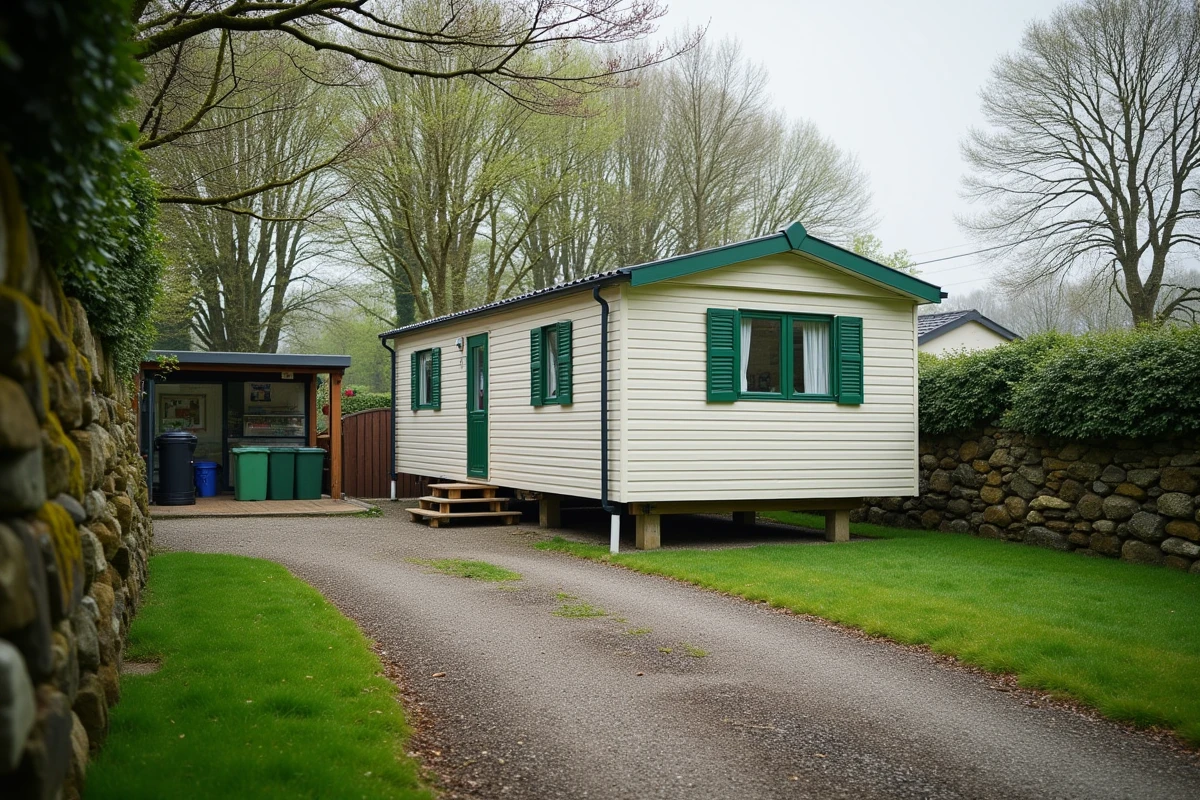
Annual charges of a plot with a mobile home: underestimated costs
The purchase price of the mobile home represents only a fraction of the actual budget. Recurring charges weigh on profitability and are rarely detailed in advertisements.
- The annual rent for the pitch, which varies according to location (Morbihan coast, inland Côtes d’Armor, southern Finistère) and the standing of the park.
- Water, electricity, and gas consumption, billed separately from the rent in most parks.
- The tourist tax, applicable in Breton tourist municipalities, and the property tax if the PRL is subject to it.
- Mobile home insurance, mandatory, which increases with the age of the model and exposure to coastal weather.
- Structural maintenance costs: roof waterproofing, chassis treatment against saline corrosion, connection revisions.
By adding these items over a year, one obtains a holding cost that can represent a significant portion of the initial purchase price. Comparing this total to the seasonal rental cost in the same area remains the best test of economic coherence.
The Breton market for plots with mobile homes remains accessible, but a good deal is measured by the remaining lease duration, the clarity of the pitch contract, and the realism of the annual budget. A hasty purchase based on a coastal crush quickly turns into a fixed charge if these three parameters have not been clearly established before signing.