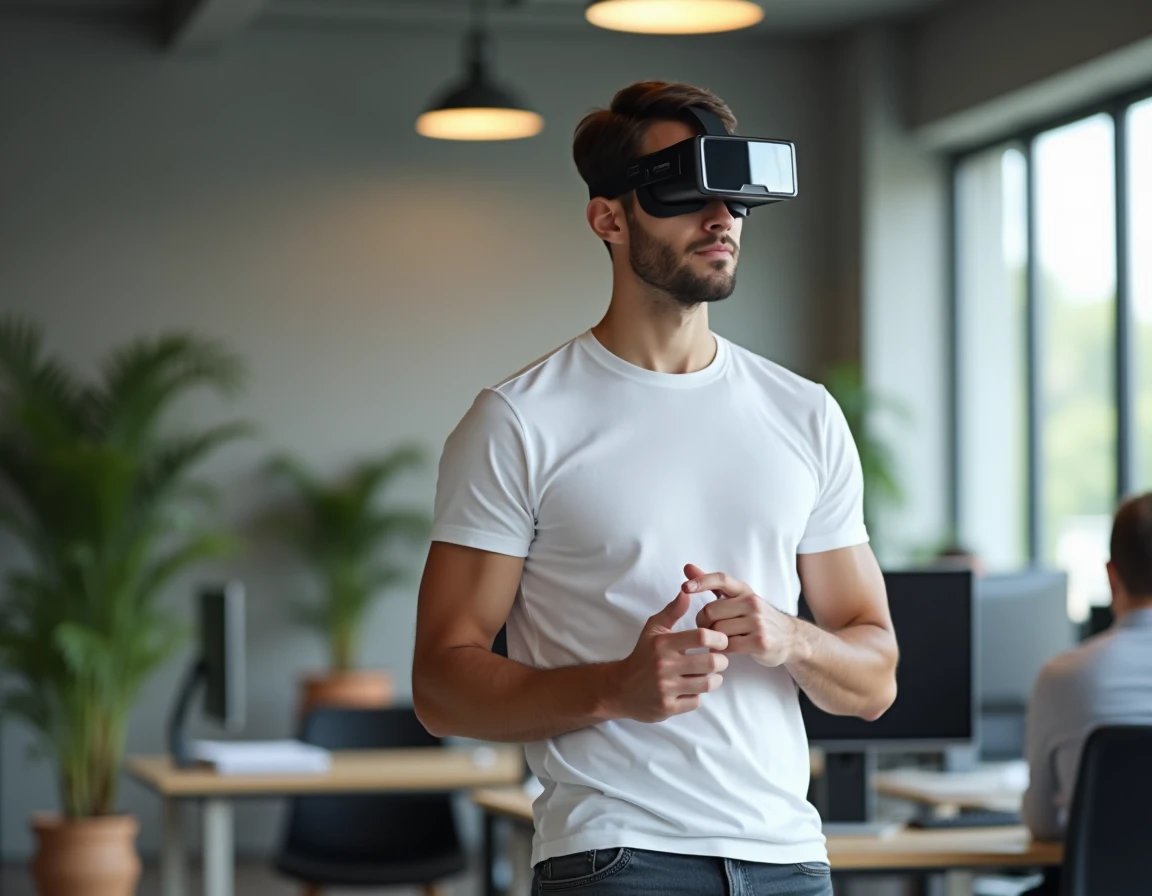
The high-tech innovations of 2024 are not just about iterations of smartphones or gadgets showcased with fanfare at CES. The real shift is happening on deeper layers: chips dedicated to local inference, regulatory frameworks for mixed reality headsets, and urban infrastructure driven by climate sensors. We are witnessing a shift from raw performance to contextual optimization, where each hardware component carries its own adaptation logic.
AI PCs and Embedded NPUs: Local Inference Replaces the Cloud
The most structuring trend of 2024 for the consumer market remains the emergence of AI PCs equipped with dedicated NPUs. These neural processing units, integrated directly into the laptop’s SoC, allow for running language models and visual creation tools without sending any requests to a remote server.
The technical interest is twofold. Latency drops significantly compared to a cloud API call, and energy consumption per AI task decreases noticeably compared to processing on a traditional CPU or GPU. For a professional handling confidential files, local processing also eliminates the issue of data exposure.
We recommend checking for the presence of an NPU on the technical specifications before purchasing a laptop in 2024. Performance benchmarks on Web Adresses’ tech site allow for comparing available architectures based on targeted uses. An undersized NPU turns the marketing promise into a mere software gadget, without real gains in speed or battery life.

Mixed Reality Headsets: European Regulation Changes the Game
The deployment of mixed reality headsets in businesses has been facing an unprecedented regulatory framework in Europe since 2024. Several countries have begun to regulate these devices through occupational health standards, targeting three specific areas: maximum exposure duration, allowed brightness levels, and protection of biometric data collected by integrated sensors.
Manufacturers must now integrate certified “prolonged use” modes directly into the firmware. This is no longer a software option that can be disabled by the user, but a requirement to market the product in the European market.
For companies using mixed reality in training or maintenance, the operational impact is concrete:
- Immersive training sessions must adhere to documented duration limits, which requires rethinking the pedagogical structure
- Biometric sensors (eye tracking, heart rate) generate data subject to GDPR, with an obligation for explicit consent and secure storage
- Firmware updates incorporating certified modes may alter graphical performance, necessitating application retesting
This regulation pushes manufacturers to clearly differentiate their professional ranges from their consumer products, where the boundary has remained blurred until now.
Resilient Smart Infrastructure: Climate Sensors and Real-Time Reconfiguration
One area still underreported in French-speaking media concerns smart infrastructure solutions designed to withstand extreme climate events. Projects presented at APEX Chicago showcase a radically different approach to the classic connected city.
The principle relies on networks of sensors deployed on roads, parking lots, and public lighting systems, coupled with algorithms capable of reconfiguring energy and traffic flows in real-time. During a flood or heatwave, the system automatically redistributes electrical power to priority areas and diverts traffic flows to minimize congestion.
Climate resilience becomes a design criterion from the specifications, rather than an afterthought. For local authorities, this means that the initial cost incorporates robustness to extreme scenarios, which profoundly alters tenders and budgetary decisions.
High-Tech Trends 2024: What Distinguishes Sustainable Innovations from Hype
Every year, CES and Asian trade shows generate hundreds of announcements. The challenge for a professional buyer or technical decision-maker is to separate technologies that will reach the market from those that will remain prototypes.
Three criteria effectively filter the innovations:
- The presence of a regulatory or normative framework (like for mixed reality headsets) indicates that the industry anticipates large-scale deployment
- Hardware integration into mass-produced components (NPUs in consumer SoCs) confirms that the production cost increase is absorbed by manufacturers
- The existence of documented use cases in real conditions (smart infrastructure tested against climate events) distinguishes a functional product from a trade show demonstration
Innovations that check these three boxes in 2024, such as AI PCs, regulated headsets, and resilient infrastructure, share a common point: they respond to a measurable external constraint (energy, compliance, climate) rather than a mere race for specifications.
The technology landscape in 2024 is characterized less by spectacular breakthroughs than by technical maturation on concrete fronts. The companies that will make the most of these advancements are those that evaluate each innovation not on its marketing promise, but on its ability to function in a constrained, regulated, and changing environment.