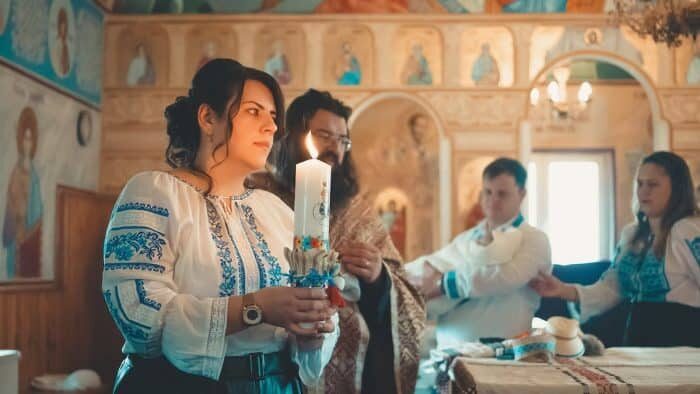
Financial participation during a baptism often raises questions for guests. How do you determine the appropriate amount to give? Should you opt for a symbolic gift instead? This delicate question depends on several factors such as your closeness to the family, cultural traditions, and individual financial means. To shed light on these uncertainties, it may be helpful to turn to people who have already experienced this or seek advice from professionals in the field. Answers to these questions and many more will be provided in the following sections.
Money and Baptisms: A Long History
The history of financial participation in baptisms dates back centuries. This practice is rooted in various cultures around the world and originates from the need to provide material support to the parents of the newborn during this important event. Traditionally, relatives and the community would come together to offer a monetary contribution to help the parents meet the needs of the baby.
But what about today? How much to give for a baptism? The answer is not so simple. There is no fixed or standard amount, as it depends on many factors such as your relationship with the family, your financial means, and the cultural traditions in place.
It is recommended to consider several elements before deciding how much to give. Think about your relationship with the family: are you a close relative or just an occasional guest? Assess your personal financial resources: what budget can you allocate without putting yourself in difficulty?
It may be useful to examine common practices in your surroundings as well as those specific to the country where the baptism is taking place. In some cultures, for example, it is customary to give a symbolic gift rather than a sum of money.
The important thing is to show generosity while respecting your own financial limits. It is better to give what you can comfortably afford rather than imposing a burden that is too heavy to bear.
There are no strictly established rules regarding financial participation during a baptism. It is best to adapt your contribution based on the circumstances and your means, while keeping in mind that the intention behind the gesture matters as much as the amount given.
Why Is It Necessary to Pay for a Baptism?
Financial participation during a baptism can have various meanings and motivations. It is often seen as an act of solidarity towards the baby’s parents. By offering a monetary contribution, the extended family and friends show their support and commitment to the child’s well-being.
Financial participation is also practiced to help parents cover the costs associated with the event itself. Organizing a baptism can involve significant expenses, such as reserving a venue, purchasing special clothing for the baby, or preparing the festive meal that will follow the ceremony.
In some cases, this practice can be seen as a way for guests to contribute to the financial future of the newborn. The donations received can be set aside in a savings account or invested to create capital for the baby’s present or future needs.
It is important to mention that financial participation during a baptism can vary according to cultural traditions.
Various Ways to Contribute Financially
Financial participation during a baptism can take various forms and adapt to cultural and family preferences. Here are some of the most common options:
The cash gift: This is the most common form of financial participation. Guests can freely choose the amount they wish to offer, depending on their means and their relationship with the baby’s parents.
Symbolic gifts: Some guests opt for a material gift whose value is equivalent to a monetary contribution. For example, they might give a silver piggy bank or a precious piece of jewelry that will also serve as a financial investment for the child.
The Legal Rules Surrounding Financial Participation
The legal implications of financial participation during a baptism are often overlooked. You must understand that any monetary contribution received can be considered a gift, subject to certain tax and legal regulations.
In some countries, it is necessary to declare the donations received, even if they are intended for family events such as baptisms. This allows tax authorities to verify the source of funds and prevent any money laundering or tax evasion.
It is therefore recommended that the baby’s parents and guests be transparent about their financial participation. If the total amount of donations exceeds a predetermined threshold set by law, it may be necessary to provide legitimate justification for these funds.
In cases where parents decide to invest the money received to ensure a more stable financial future for their child, you must consider the legal aspects related to financial investment.
How to Determine the Contribution Amount
When determining the amount of financial participation for a baptism, be sure to consider your budget and financial means. You should never feel obligated to make a contribution that exceeds your capabilities.
Another factor to consider is the social and cultural etiquette associated with baptism in your community. In some cultures, higher contributions are seen as signals of respect and honor towards the family of the newborn. This can vary according to local traditions.
Be sure to take into account the bond you have with the baby’s parents. If you are close or a direct family member, a more generous contribution might be expected. Conversely, if you are just a friend or colleague, a modest contribution may be just as appreciated.
Keep in mind that the amount is not always synonymous with quality or affection. The essence of the baptism lies in its sacred and symbolic nature rather than its financial aspect. A warm presence and sincere wishes can sometimes far outweigh any monetary contribution.
Remember that there are no strictly defined rules regarding the appropriate amount for financial participation during a baptism. Each situation is unique and personal.
Discuss with the baby’s parents to establish together what works best for all parties involved.
Determining the amount of financial participation during a baptism is a personal decision that depends on various factors. It is crucial to evaluate your budget, cultural and social expectations, as well as the relationship you have with the baby’s parents. Remember that the financial aspect should not overshadow the very essence of this religious ceremony. Always prioritize sincere and authentic gestures towards the family of the newborn to mark this special moment in their lives.
Alternatives to Financial Participation at Baptisms
There are several alternatives to financial participation during baptisms for those who wish to offer their support in other ways. Here are some ideas to consider:
Offer a symbolic gift: Instead of giving a sum of money, you can choose to give a symbolic gift to the baby or their parents. This could be a religious book, a medal, or any other item related to spirituality and the celebration of the baptism.
Give your time: Another way to contribute is to offer your help in the preparations for the baptism. You can offer your services to decorate the church, prepare the festive meal, or organize activities to entertain the guests.
Be creative: If you have artistic or craft skills, you can create something special for the occasion. Whether it’s a personalized painting, a sculpture, or even homemade cakes, your unique creation will surely be appreciated by the family of the newborn.
Present your sincere wishes: When attending the baptism, feel free to express your wishes and affection towards the baby and their family during the ceremony or in a personal letter. Sincere words often hold more value than any material contribution.
Participate in practical tasks: If you are close to the baby’s parents, offer to help them with practical tasks related to the baptism such as printing invitations, welcoming guests during the ceremony, or cleaning up after the festivities.
Make a donation to a charity: If you prefer not to contribute financially to the baptism, you can offer to make a donation to a charity chosen by the baby’s parents in their name. This will help those in need while marking the special occasion.
Remember that what truly matters during a baptism is not just the financial participation, but also the love and support we provide to those involved. Whatever way you choose to participate, ensure that it reflects your relationship with the family of the newborn and your sincere desire to share this special moment with them.