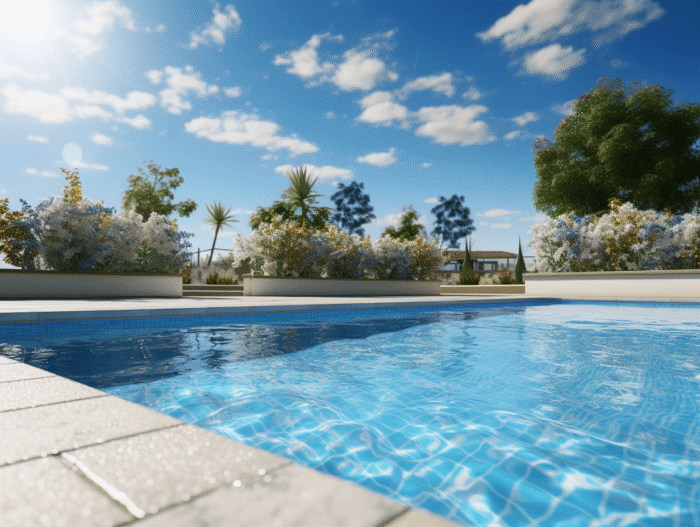
The installation of an above-ground concrete block pool is an appealing project for many homeowners looking to add a touch of luxury and leisure to their outdoor space. This option, more durable than inflatable or kit structures, requires careful planning and the selection of suitable materials. Concrete blocks, the building blocks of this construction, come in several types, each meeting specific criteria for strength and aesthetics. Before diving in, it is essential to consider the constraints of the terrain, local regulations, and necessary safety measures to ensure the durability and safety of the installation.
Choosing the concrete block for an above-ground pool: criteria and options
Building an above-ground concrete block pool offers significant advantages in terms of strength, customization, and durability. The concrete blocks, cornerstones of this project, come in several variants, namely hollow blocks, U-shaped blocks, and corner blocks, each serving specific purposes in the pool’s construction. The wise choice of these masonry blocks is crucial for ensuring the stability and aesthetics of the aquatic structure.
The hollow block, often used for load-bearing walls, is characterized by its ability to be reinforced and filled with concrete, thus ensuring increased resistance of the structure. The U-shaped block, on the other hand, is specially designed for horizontal and vertical reinforcements, while the corner block is essential for accurately and robustly creating the corners of the pool. These different types of concrete blocks are essential components for ensuring the long-term integrity of the pool.
The formwork block represents another option to consider. Made of concrete and gravel or polystyrene, it allows for quick implementation and easy adaptation to the desired shapes for the pool. This construction technique, due to its ease of installation and the cohesion it brings to the reinforced concrete, contributes to the building of an above-ground pool as solid as an inground structure.
To finalize the project, the choice of a waterproof coating is fundamental. Options vary between liner, reinforced PVC membrane, and laminated polyester. Each of these coatings offers impermeability and resistance to UV rays and chemicals, essential elements for preserving water quality and the longevity of the pool. Consider these elements to ensure the waterproofing and aesthetic finish of your above-ground concrete block pool.
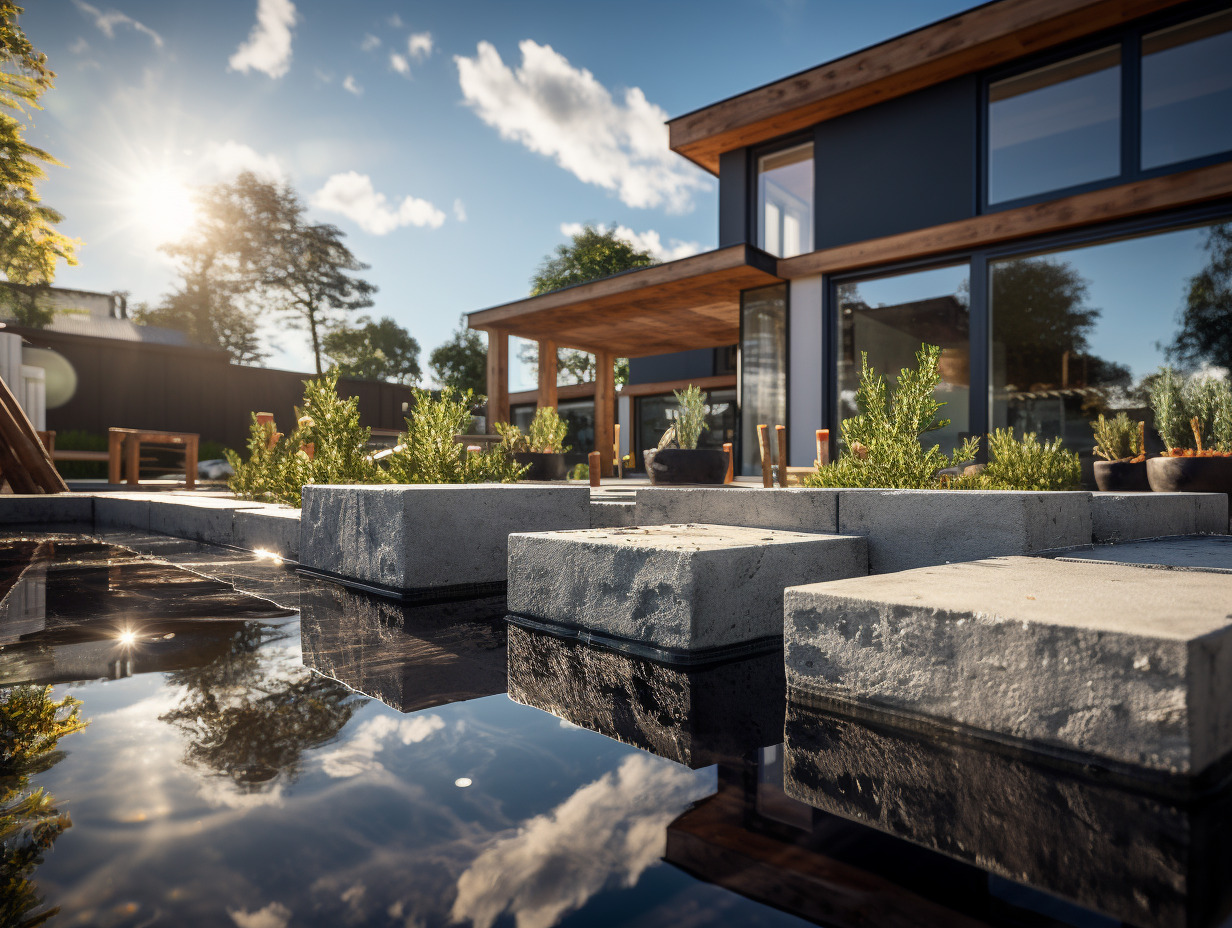
Building your above-ground pool with concrete blocks: steps and safety recommendations
The construction of the above-ground pool with concrete blocks unfolds according to well-defined steps, involving rigor and precision. The earthworks, the first essential phase, determines the stability of the whole. It is necessary to level and compact the ground to accommodate the foundations. Following this are the reinforcement and the construction of the walls with the chosen types of concrete blocks, strictly adhering to the technical specifications for each block variant. Reinforcement is particularly crucial in this process, strengthening the structure against mechanical stresses and water pressure.
The above-ground concrete pool can be built using modular panels or traditional masonry with concrete blocks. Modular panels offer an interesting alternative for those looking for ready-to-assemble kit solutions. However, for those who prefer a more traditional approach, masonry construction, although more labor-intensive, allows for greater customization and is built to last.
The final step, the filling, is the moment of truth for any pool. Before filling the basin, all precautions must be taken to ensure waterproofing, particularly by applying the chosen coating, whether it be liner, reinforced PVC membrane, or laminated polyester. Ensure that all filtration and water treatment equipment is installed and functional. A meticulous attention to detail during this phase guarantees an above-ground concrete block pool that combines aesthetics and functionality.