Butternut squash can handle the heat, but not just any way. A grower in the Vaucluse had to bring in his squash in a hurry after a heatwave season to prevent sunscald, despite having an irrigation system in place. In Loire-Atlantique, a market gardener lost part of his crop because the black mulch intensified the heat at ground level and drip irrigation wasn’t enough.
These firsthand accounts show that watering alone won’t protect butternut squash during a scorching summer. Growing it successfully means planning for the heat from sowing onwards, choosing the right mulch and keeping an eye on fruits exposed to the sun.
Butternut squash and heatwaves: adjust your mulch and protect the fruits
Have you ever noticed some butternut squash fruits turning pale or going soft on top in the height of summer? These aren’t diseases, but direct sunscald on the skin. When temperatures rise above a certain threshold, the fruit’s skin literally cooks in the sun, even if the plant is well watered.
The first step is to rethink your mulch. Black mulch (plastic sheeting or dark woven fabric) warms the soil in spring, helping plants get established. But once temperatures rise, it turns the base of the plant into a radiator. It’s better to switch to light-colored or organic mulch (wheat straw, dry hay or light-colored wood chips), which reflects some of the sun’s rays and keeps the soil cool beneath the surface.
For the fruits themselves, a simple solution works well: slide a small board, a roof tile or a piece of cardboard under and over any exposed fruit. Some gardeners deliberately let the foliage cover the fruits instead of pruning it back. Butternut squash’s broad leaves form a natural parasol. Avoid pruning the foliage above the fruits during periods of intense heat—it’s a sensible step that can prevent a lot of losses.
To grow butternut squash in your vegetable garden successfully, you need to think beyond watering and treat direct sunlight as a factor in its own right.
Sowing butternut squash: check the soil temperature, not just the date
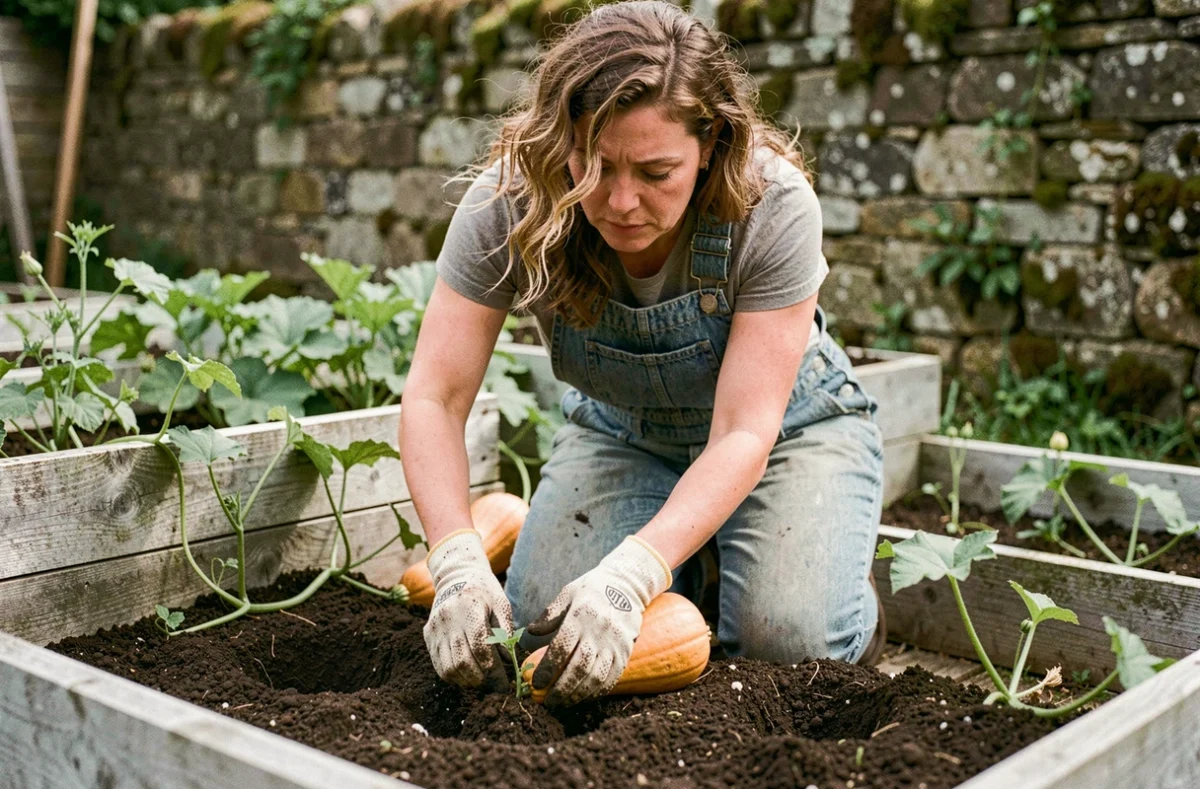
You’ll often read that butternut squash should be sown in May. That works in a typical temperate climate, but it can also be a trap. In Loire-Atlantique, a grower found that seeds and young plants were scorched as early as May during an early heatwave. The lesson is clear: soil temperature matters more than the calendar date.
Two practical precautions can help prevent this problem:
- Sow in pots in a sheltered spot (a conservatory or cold frame), then transplant once the seedlings have two true leaves, rather than sowing directly into scorching soil.
- Apply light-colored mulch as soon as you transplant to limit surface heating and protect young roots.
- Water early in the morning, never in full sun, to avoid thermal shock to the seedlings.
Harvesting butternut squash: color isn’t enough
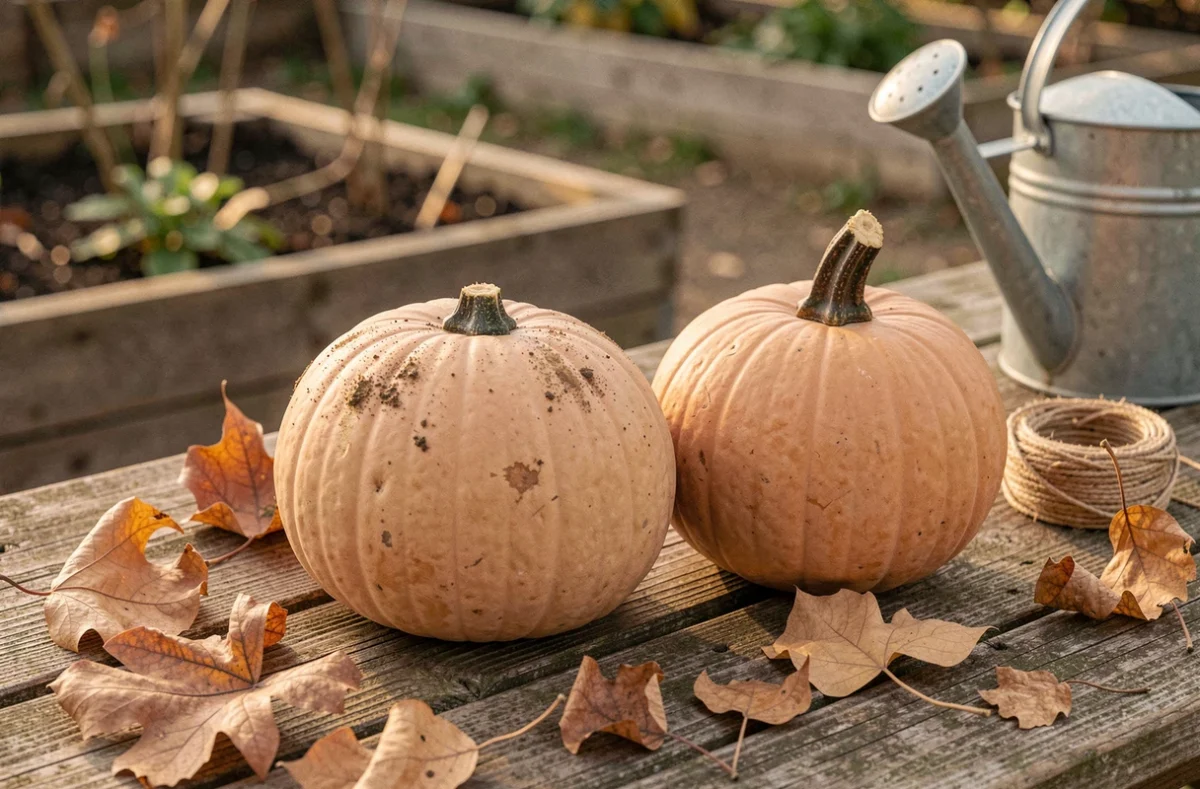
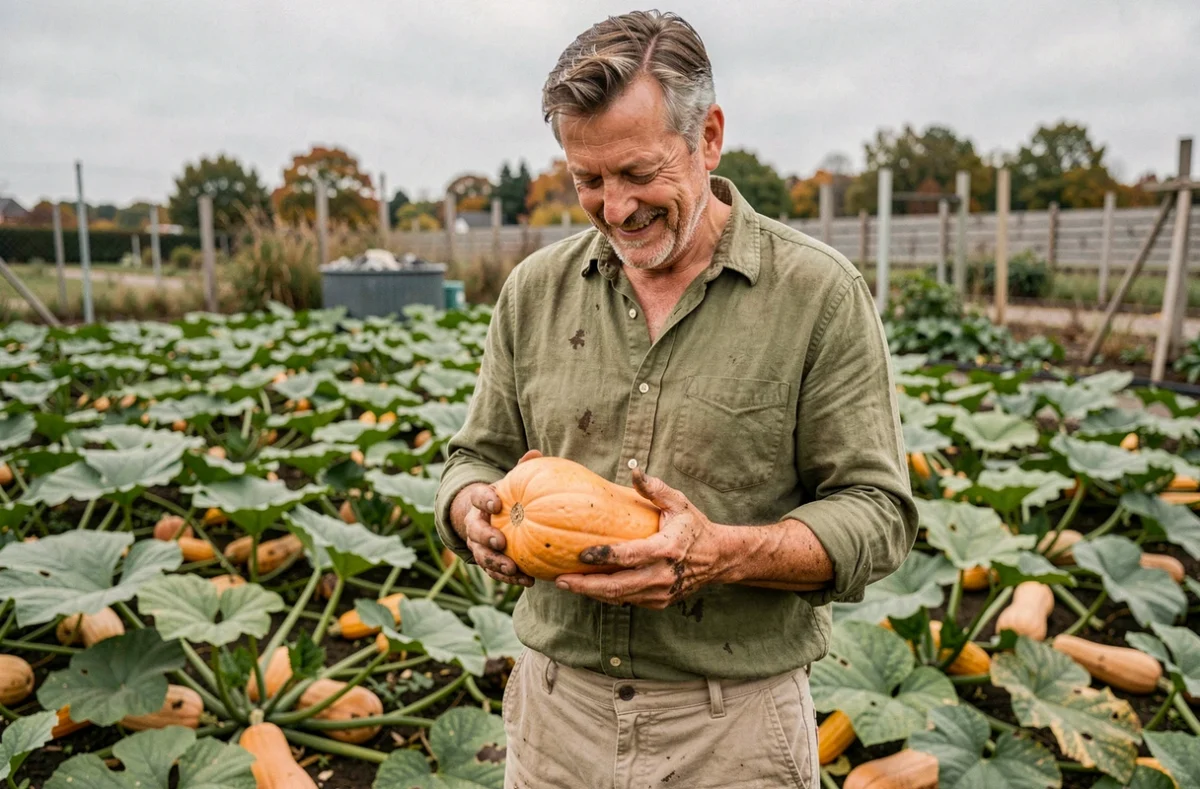
Many gardeners harvest their butternut squash as soon as it turns beige. According to a summary of recommendations from University of Massachusetts Amherst Extension, that isn’t always the right time. Ripening can continue after the fruit turns beige.
The reliable test is the firmness of the skin. Try pressing your fingernail into it. If the skin resists firmly, the fruit is ready. If it gives way, leave it on the plant a little longer, as long as the weather allows (with no frost forecast).
The stem as an indicator
The stem (the stalk connecting the fruit to the plant) provides another clue. When it starts to dry out and become woody, the fruit has completed its cycle. Cut it off, leaving several centimeters of stem attached to the fruit: this helps prevent pathogens from getting in during storage.
Storing butternut squash: curing and storage conditions
After harvesting, don’t put your butternut squash straight into a cool place. They need to cure for a few days in a dry, well-ventilated place. This process, also known as “curing,” helps the skin harden further and small wounds heal.
Arrange the fruits in a single layer, without letting them touch, in a well-ventilated space. Once they’ve dried, store them somewhere cool, dry and well ventilated. The ideal temperature is moderate: neither too warm nor too cold.
One thing to remember: excessive cold damages butternut squash and shortens its storage life. A pantry, a cupboard in an unheated room or a temperate attic are better options.
- Check the fruits every two weeks and remove any that develop soft spots.
- Don’t stack the squash: the weight can damage the skin and create spots where rot can set in.
- Keep them out of direct light, which can trigger premature sprouting.
Butternut squash harvested at the right time and stored properly will keep for several months without any problems. Successful storage depends as much on when you pick the fruit as on what you do in the days that follow, including curing. It’s a simple step that’s often overlooked, but it can make all the difference between a squash that lasts until February and one that goes soft by November.