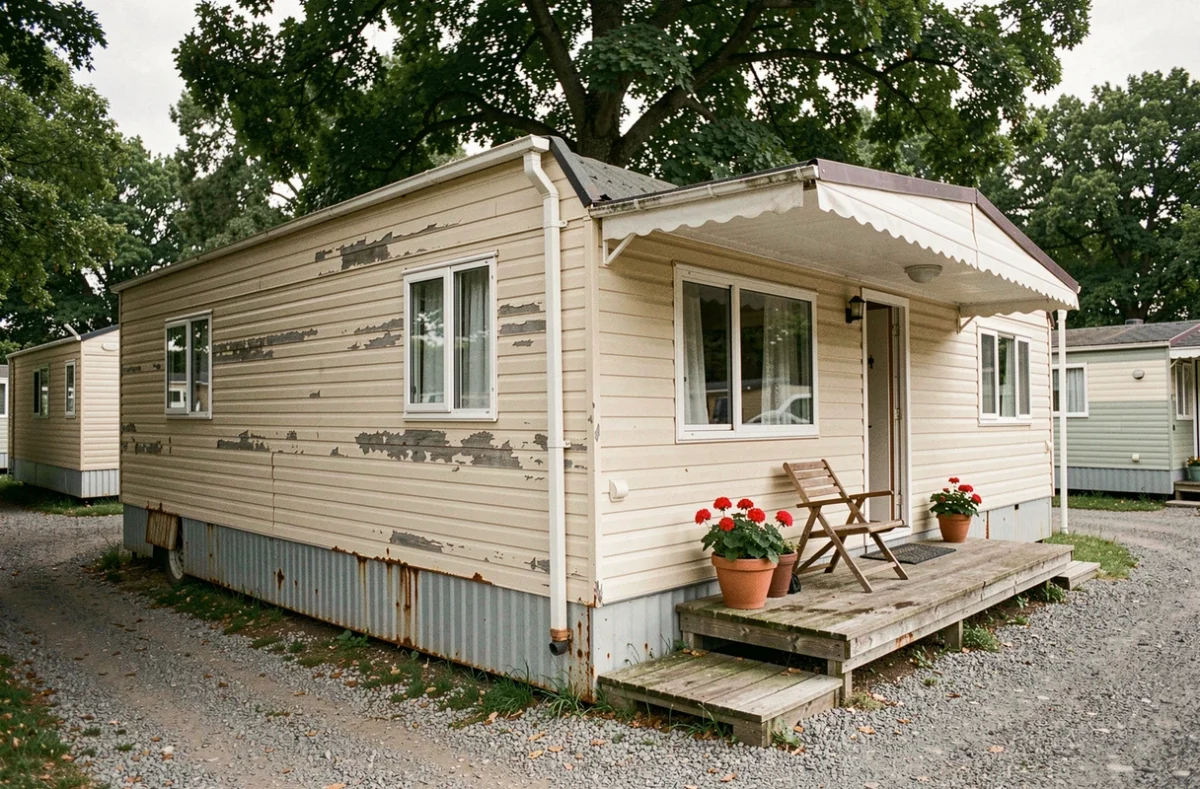
A mobile home classified as a mobile leisure residence remains subject to the same planning rules regardless of its age. No provision of the French Urban Planning Code sets a 20-year threshold beyond which a mobile home must leave its pitch. The confusion stems from the fact that this age limit often appears in pitch rental agreements signed with campsites, rather than in the law itself.
Age clauses in pitch rental agreements: how the legal mechanism actually works
French law defines a mobile home as a mobile leisure residence that permanently retains its means of mobility (wheels, chassis, tow bar). It may be installed at campsites, residential leisure parks and classified holiday villages. Nothing in these rules sets an expiry date.
The 20-year limit comes from the pitch rental agreement, a private document signed by the mobile home owner and the site operator. This agreement may include a wear-and-tear clause that makes renewal of the pitch conditional on the mobile home’s age or condition.
This distinction changes everything: the restriction is contractual, not regulatory. An owner facing a refusal to renew therefore has different options from those available when challenging an administrative ban. The law on mobile homes over 20 years old does not create an automatic replacement requirement, and it is important to understand this distinction before making any decisions.

Refusal to renew a pitch: clauses to check and possible remedies
When a campsite notifies an owner that it will not renew their pitch because of the mobile home’s age, the first step is to review the entire pitch rental agreement. Wear-and-tear clauses are not all the same, and some may be challenged.
What to check in the agreement
- The age clause must be clearly worded and accepted at the time of signing. A vague reference such as “satisfactory condition” with no measurable criteria weakens the operator’s position.
- The notice period must comply with the terms set out in the agreement. A campsite that demands the owner leave without observing this period may face a challenge.
- The clause must not be unfair under the French Consumer Code. A clause requiring replacement with a new model sold exclusively by the campsite may be considered an unfair commercial practice.
- The campsite’s internal rules, if attached to the agreement, may include additional provisions on the maintenance and exterior appearance of the mobile home.
Evidence to request from the operator
If renewal is refused, the owner can request a detailed written explanation. If the campsite cites deterioration, it should be able to identify the specific issues (roof, chassis, electrical system) underlying its decision.
Requesting an independent technical assessment can help distinguish a genuinely deteriorated mobile home from an older but well-maintained model. A campsite that refuses to provide this justification weakens its position in the event of a dispute.
Technical standards and inspections applicable to older mobile homes
A mobile home’s age does not exempt it from applicable standards. The NF S 56-410 standard governs the technical characteristics of mobile leisure residences. It covers the structure, electrical and gas systems, waterproofing and ventilation.
A mobile home over 20 years old that was built to an earlier version of this standard is not automatically non-compliant. Compliance is assessed against the rules in force at the time of manufacture, unless a subsequent regulation has made a specific upgrade mandatory.
In practice, the main concerns with older models are the gas system (connections and flexible hoses with a limited service life) and the electrical system (earthing and residual-current protection). Periodic inspections of these systems strengthen the owner’s position if an operator cites deterioration without providing specific technical grounds.
Options to consider before moving or reselling an older mobile home
Leaving the pitch is not the only option. Several avenues are worth exploring before incurring the cost of moving the mobile home or accepting a loss-making sale.
Direct negotiation with the operator is the first step. An owner who can provide evidence of regular maintenance, recent renovation invoices and a favourable technical inspection has concrete grounds to seek renewal, potentially subject to conditions.
If negotiations fail, contacting the consumer mediator or a mobile home owners’ association can help determine whether the clause being invoked is unfair. This free step is a useful precursor to any legal action.
Moving to another campsite or residential leisure park requires checking in advance that the new site accepts the model and its age. Obtaining written approval from the new operator before arranging transport helps avoid a situation where the mobile home is left without a pitch.
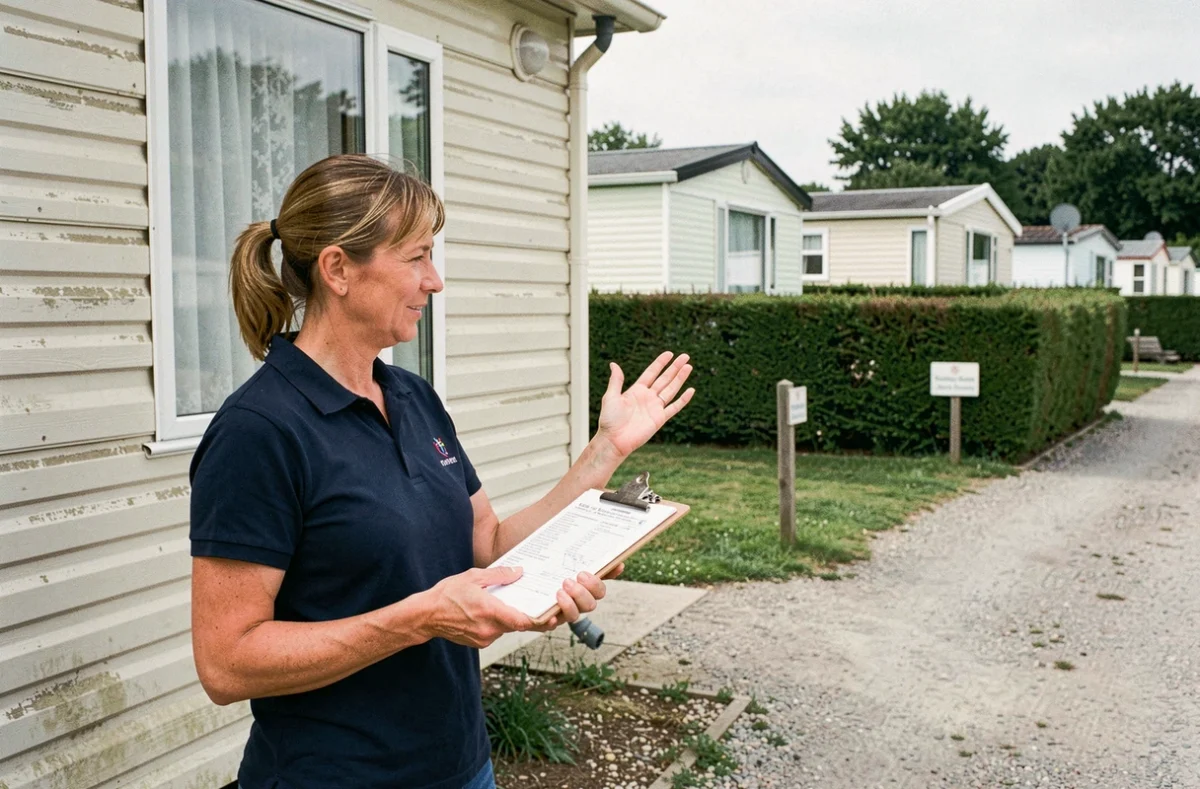
Resale on the second-hand market is still possible, but the value of a mobile home over 20 years old depends largely on its actual condition and whether it can remain on a pitch. A mobile home sold “to be moved” loses a significant portion of its value compared with one sold with a guaranteed pitch.
An order dated 18 October 2024 concerning certain applications to amend or regularise a development permit applies to applications submitted from 1 January 2025. This text does not set a maximum age for mobile homes, but it reiterates that the applicable planning rules must be checked at the time of each application. Regulations evolve, so before making any decision, the most useful precaution is to consult the local planning document and the agreement currently in force.